




Automotive Electronic Safety: Ever-Increasing Standards and Requirements
Electronics are now at the core of modern vehicles. Braking, steering, driver assistance, engine management, and parking aids all rely on electronic systems that directly contribute to the safety of both vehicle occupants and road users.
While a car from the 1990s contained only a few electronic control units (ECUs), modern vehicles can now integrate anywhere from 50 to 150, depending on the vehicle segment and equipment level.
But how does the automotive industry compare with other highly critical sectors such as aerospace, rail, nuclear, or medical technologies?
Safety Standards Inspired by Critical Industries
For decades, industries such as aerospace, railway, nuclear energy, and medical technology have developed methodologies designed to reduce the risks associated with electronic or software failures.
These approaches are based on several key principles:
- risk analysis ;
- fault detection ;
- system redundancy ;
- fail-safe strategies ;
- and rigorous development and validation processes.
As electronics became increasingly central to vehicle architecture, the automotive industry progressively adopted and adapted these methods.
Today, some critical automotive functions have reached levels of complexity once reserved for industrial or aerospace applications, particularly with the emergence of advanced driver assistance systems.
Automotive Safety Facing New Challenges
This evolution led the automotive sector to establish its own functional safety framework, most notably through the ISO 26262 standard.
This international standard defines different criticality levels known as ASILs (Automotive Safety Integrity Levels), which are used to tailor development requirements according to the risks associated with each function.
ASIL assessment is based on three main criteria:
- the potential severity of a failure,
- the frequency of exposure to a hazardous situation,
- and the driver’s ability to maintain vehicle control.
An electronic braking, steering, or acceleration system obviously does not require the same level of safety integrity as a comfort or infotainment feature.
A Unique Challenge: Combining Safety with Mass Production
The automotive industry faces a unique constraint: achieving extremely high safety standards while remaining compatible with large-scale industrial production.
Unlike other critical industries that manufacture in limited volumes, automotive manufacturers must design systems that remain reliable:
- across millions of vehicles ;
- in highly diverse environments ;
- over long product lifecycles ;
- while meeting strict cost, packaging, and maintenance constraints.
This challenge explains the growing importance of validation methods, testing tools, and fault-monitoring capabilities in embedded electronic systems.
The Rise of ADAS and Assisted Driving
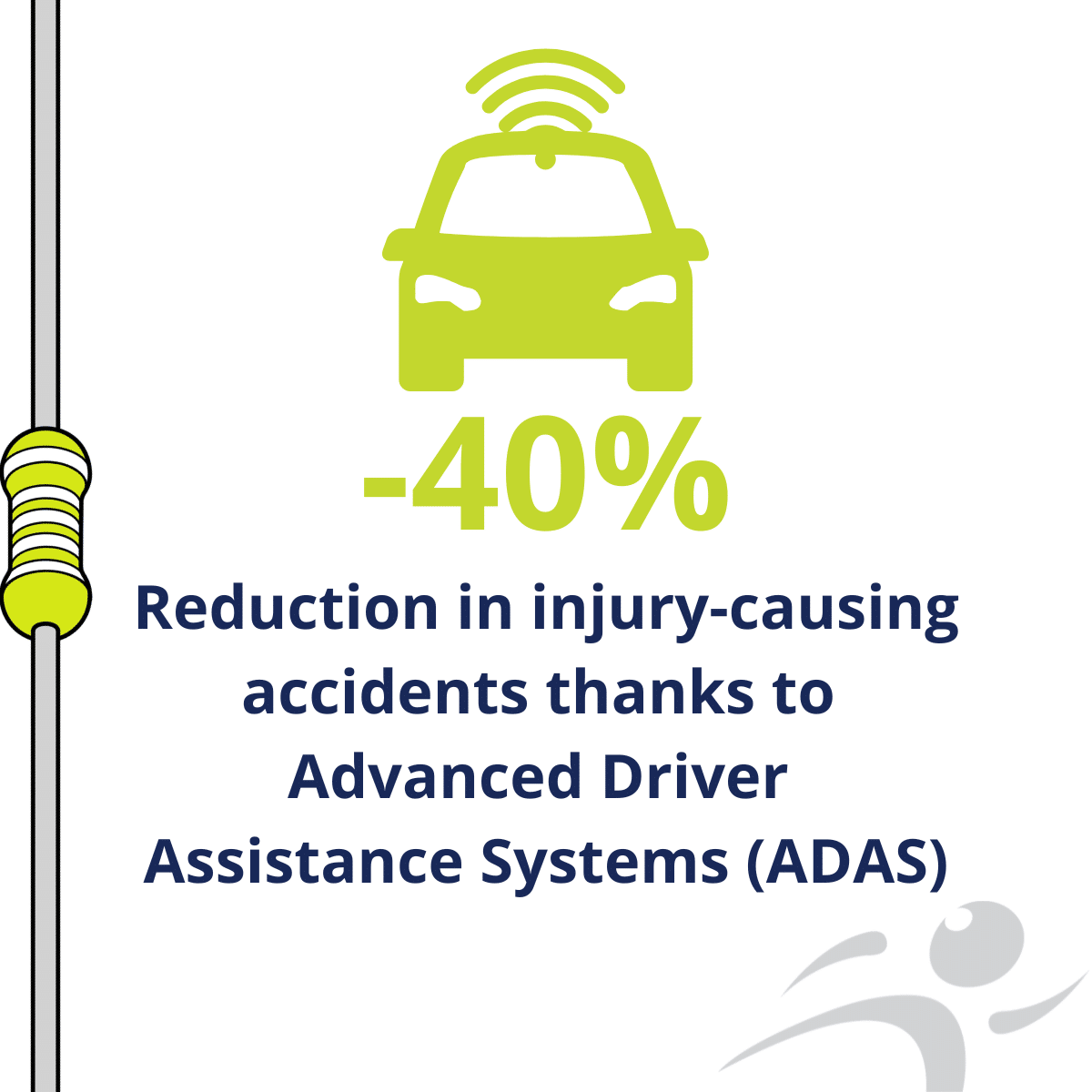
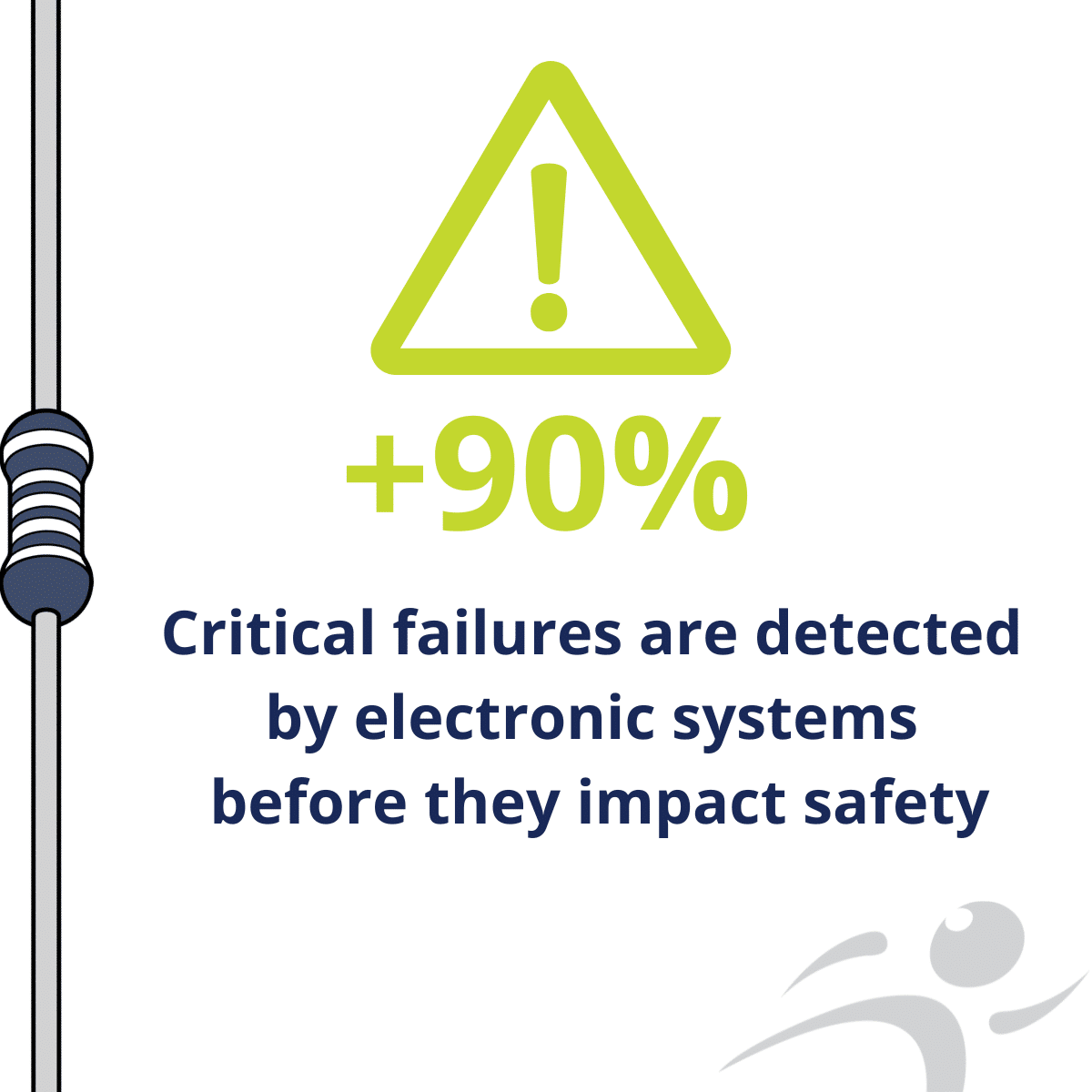
With the rapid development of ADAS (Advanced Driver Assistance Systems), safety requirements continue to increase significantly.
Automatic emergency braking, lane keeping assistance, adaptive cruise control, and obstacle detection systems are becoming increasingly involved in vehicle control.
The objective is clear: reduce road accidents and improve road safety. The European Commission is notably pursuing its “Vision Zero” strategy, aiming to move toward zero road fatalities by 2050, with an intermediate target of reducing deaths and serious injuries by 50% by 2030.
This evolution further reinforces the importance of:
- functional safety ;
- embedded software ;
- cybersecurity ;
- and continuous monitoring of electronic systems.
The Specific Case of Adaptive Driving Equipment
In the field of adaptive driving, safety requirements are even higher.
Drivers directly depend on these systems to access mobility and maintain control of the vehicle. Reliability, system availability, and fault detection therefore become absolutely critical.
Adaptive driving equipment must guarantee safe, predictable, and robust operation under all usage conditions.
Conclusion
Historically, the automotive industry was not the most constrained sector in terms of electronic safety. However, it is undoubtedly one of the fastest evolving today.
The increasing integration of electronics, driver assistance technologies, and vehicle automation is profoundly transforming industry requirements.
Adaptive driving perfectly illustrates this evolution by combining technological innovation, functional safety, and a major human challenge: enabling everyone to maintain their mobility safely and independently.
Discover More Articles About Automotive Electronics
Why Electronics? A Choice That Has Become Essential
Aide à la conduite handicapé – électronique contre mécanique : le match