



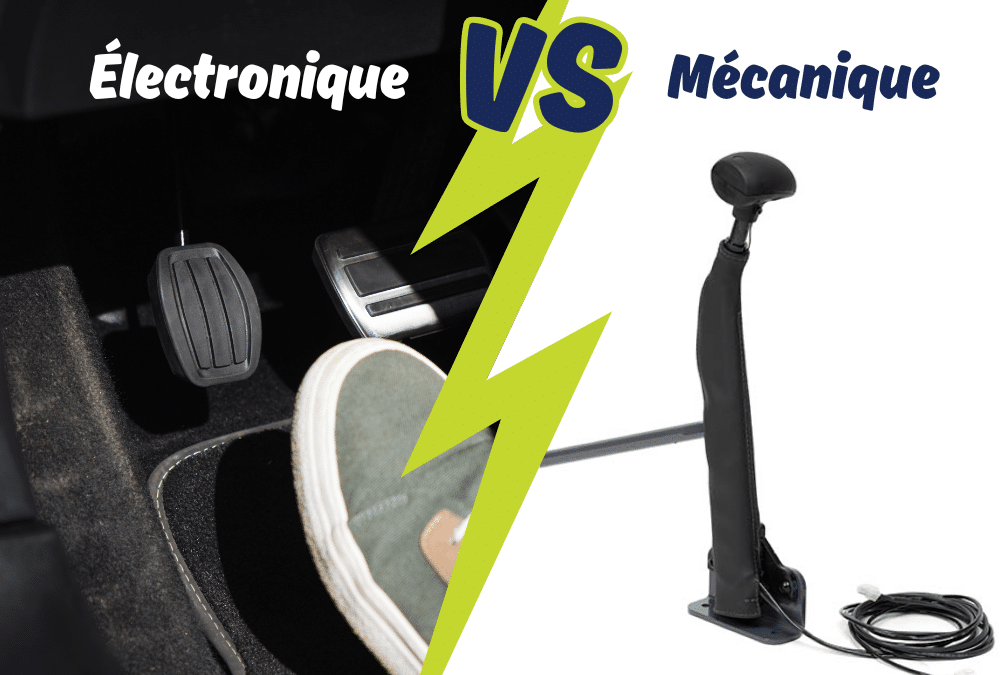
Adaptive Driving Aids – Electronics vs Mechanics: The comparaison
For many years, mechanical systems were considered more reliable than electronics: less sensitive, more tangible, and easier to repair.
But is that perception still relevant today?
Advances in electronics have significantly challenged this long-standing belief.
Fewer Components, Less Wear
Mechanical systems rely on friction, physical stress, and moving parts — which inevitably lead to wear over time.
Electronic systems, on the other hand, drastically reduce the number of mechanical components involved. The result is:
- less wear,
- reduced maintenance,
- and greater long-term stability.
Enhanced Driving Comfort
Beyond reducing mechanical wear, electronics also provide valuable assistance to the user.
In adaptive driving, electronic controls often significantly reduce the physical effort required to operate the equipment. For example, an electronically controlled acceleration lever generally requires far less force than a traditional cable- or linkage-based mechanical system.
This assistance improves driving comfort, reduces fatigue, and allows for smoother, more precise, and more progressive control.
Smarter and Safer Systems
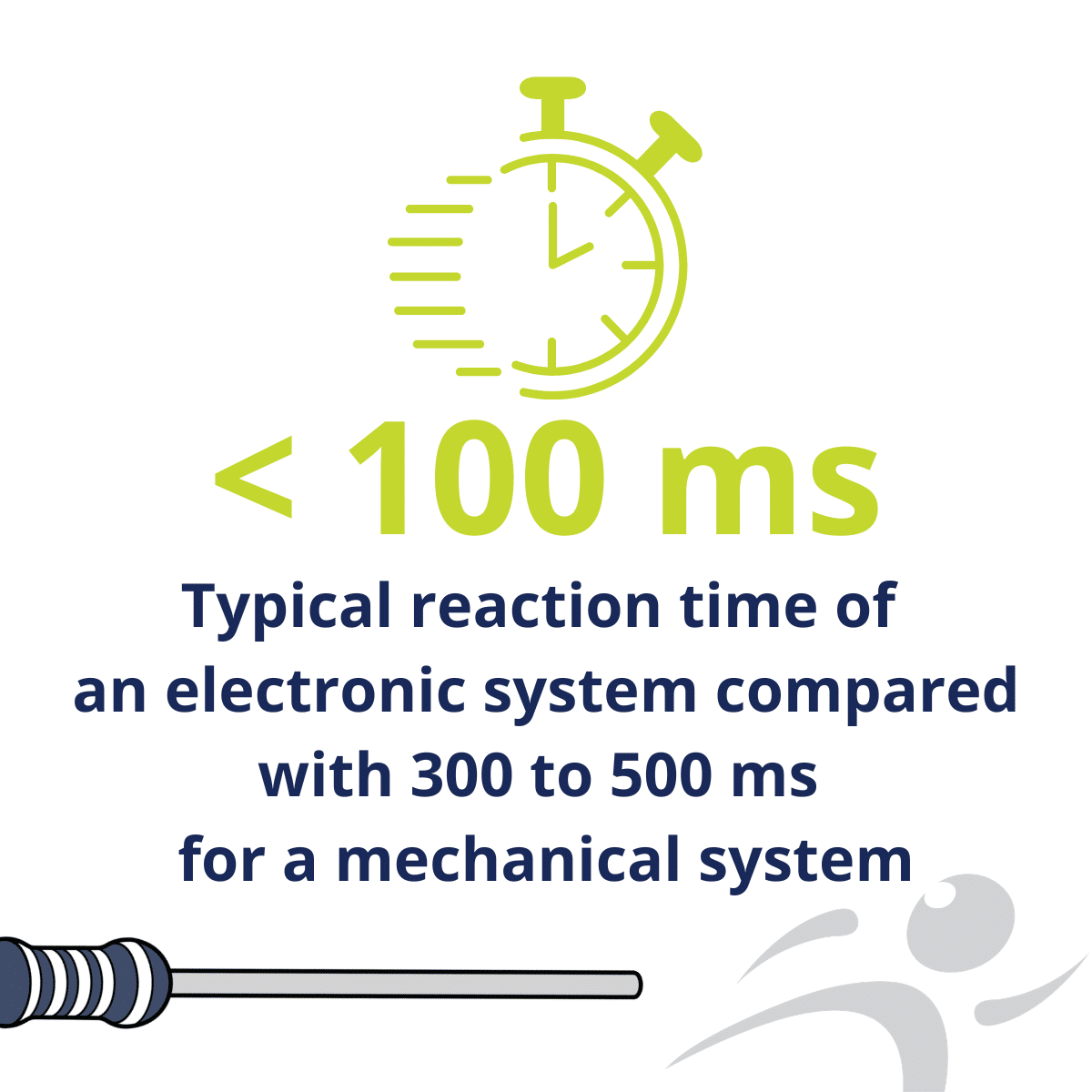
According to BOSCH Mobility, the average reaction time of an electronic system is under 100 milliseconds, compared with 300 to 500 milliseconds for a mechanical system.
In addition to the safety benefits they bring to road users — as explained in the article Why Electronics? — modern electronic systems integrate multiple advanced safety functions within a compact design and with an average weight reduction of 25%:
- automatic self-tests,
- onboard diagnostics,
- and integrated safety protections.
These systems do more than simply operate: they continuously monitor their own condition.
Refurbishment: A Reality for Electronics
Contrary to common misconceptions, electronic systems can also be diagnosed, repaired, refurbished, and upgraded.
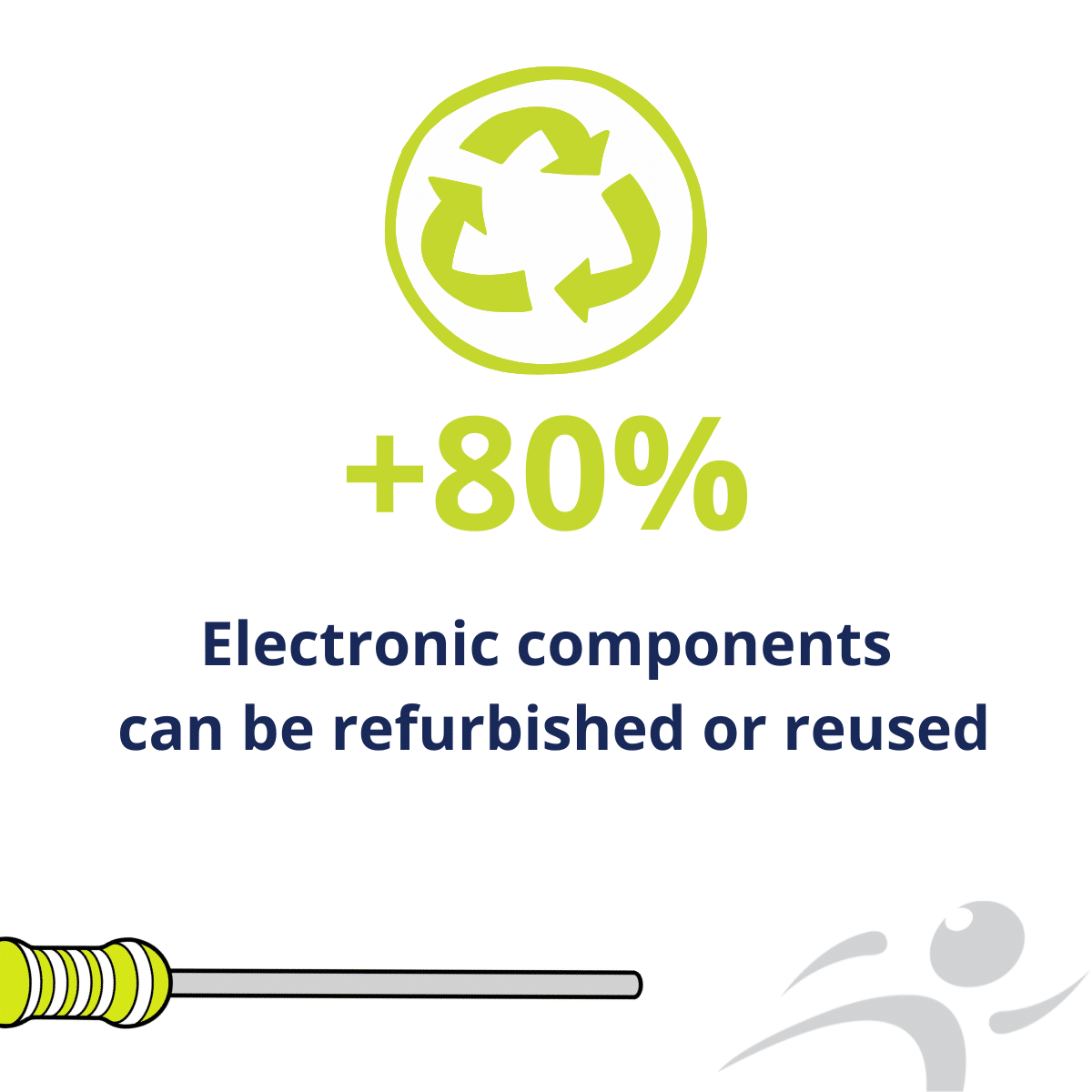
According to ADEME, more than 80% of electronic components were reusable or refurbishable in 2024. This perfectly aligns with our 2nd Drive – Refurbished by Sojadis approach.
This durability is further enhanced by embedded software. One of the greatest advantages of electronics is their ability to evolve over time.
Software updates can extend a system’s lifespan without requiring major hardware intervention. Reuse and redeployment of equipment are also made possible through reprogramming.
A New Vision of Durability
Durability no longer depends solely on physical robustness.
When designed to high standards, electronics introduce a new form of longevity: intelligent, scalable, and controlled durability.
Conclusion
Durability, reliability, and refurbishment: today, electronics clearly win the match.
However, the real challenge is not to oppose mechanics and electronics, but to combine the strengths of both technologies in the service of mobility.
Discover More Articles About Automotive Electronics
Why Electronics? A Choice That Has Become Essential